

Foster Fund
A platform replacing fragmented foster dog applications with one universal form, smart matching, and guaranteed foster compensation - built from zero in 10 weeks.
View Live Webiste: https://www.thefosterfund.com/
Overview
FosterFund is a nonprofit startup focused on addressing one of the biggest challenges in animal rescue: connecting qualified foster caregivers with dogs in need of temporary homes. With shelters across the United States facing severe overcrowding, thousands of adoptable dogs are euthanized each day despite a shortage of willing foster families.
As part of a cross-functional design team, I helped design FosterFund's first MVP platform. Our goal was to streamline the fragmented foster application process and create a scalable system that enables fosters to apply once and connect with multiple rescue organizations through a single experience.
My Role
Role: UX Designer
Team of 6 Designers, 1 Product Manager, 1 Design Manager
Responsibilities included:
UX strategy and feature prioritization
User flows and information architecture
Wireframing and prototyping
Usability testing and synthesis
Brief video about the project
PHASE 1: DISCOVERING THE PROBLEM
The Challenge
Fostering a rescue dog is often far more complicated than users expect. Most rescue organizations operate independently, requiring potential fosters to repeatedly fill out lengthy applications, provide the same information multiple times, and navigate inconsistent approval processes.
For rescue organizations, managing foster applications is equally inefficient. Limited staff and volunteer resources make it difficult to review applications, coordinate placements, and maintain an active foster network. FosterFund wanted to create a centralized platform that reduced friction for both sides while remaining feasible as an MVP.
Understanding the Opportunity
During stakeholder workshops and discovery sessions, we worked closely with FosterFund's founders to understand their vision, operational challenges, and long-term goals. While the organization had ambitious plans for fostering and adoption, we needed to identify the smallest set of features capable of delivering immediate value.
Three priorities consistently emerged:
Simplify foster onboarding through a universal application.
Improve foster-to-dog matching through searchable profiles.
Give rescue organizations lightweight tools to manage available dogs and foster applicants.
These priorities became the foundation of our MVP strategy and guided every design decision throughout the project.
PHASE 6: IMPACT AND REFLECTION
Outcome & Reflection
By the end of the engagement, our team delivered responsive prototypes, user flows, design documentation, and a scalable design system to support development of FosterFund's first digital product. The MVP provided a clear roadmap for transforming a fragmented fostering process into a centralized experience designed to increase participation and improve rescue outcomes.
One of the most valuable lessons from this project was learning how to balance mission-driven goals with MVP constraints. While the long-term vision was expansive, focusing on the most critical user and business problems allowed us to create a solution that delivered immediate value while leaving room for future growth.

Research & Competitive Analysis
To understand how users currently discover and apply for foster opportunities, we evaluated leading pet adoption and rescue platforms. While many products successfully helped users browse available pets, few effectively supported the foster journey from initial interest to completed application.
Across competitors, we identified three patterns that influenced our design direction: strong calls-to-action, clear explanations of the process, and motivational content that encouraged users to take the next step. These findings revealed an opportunity to reduce uncertainty and create a more guided fostering experience.

PHASE 2: DEFINING THE STRATEGY
Defining the Experience
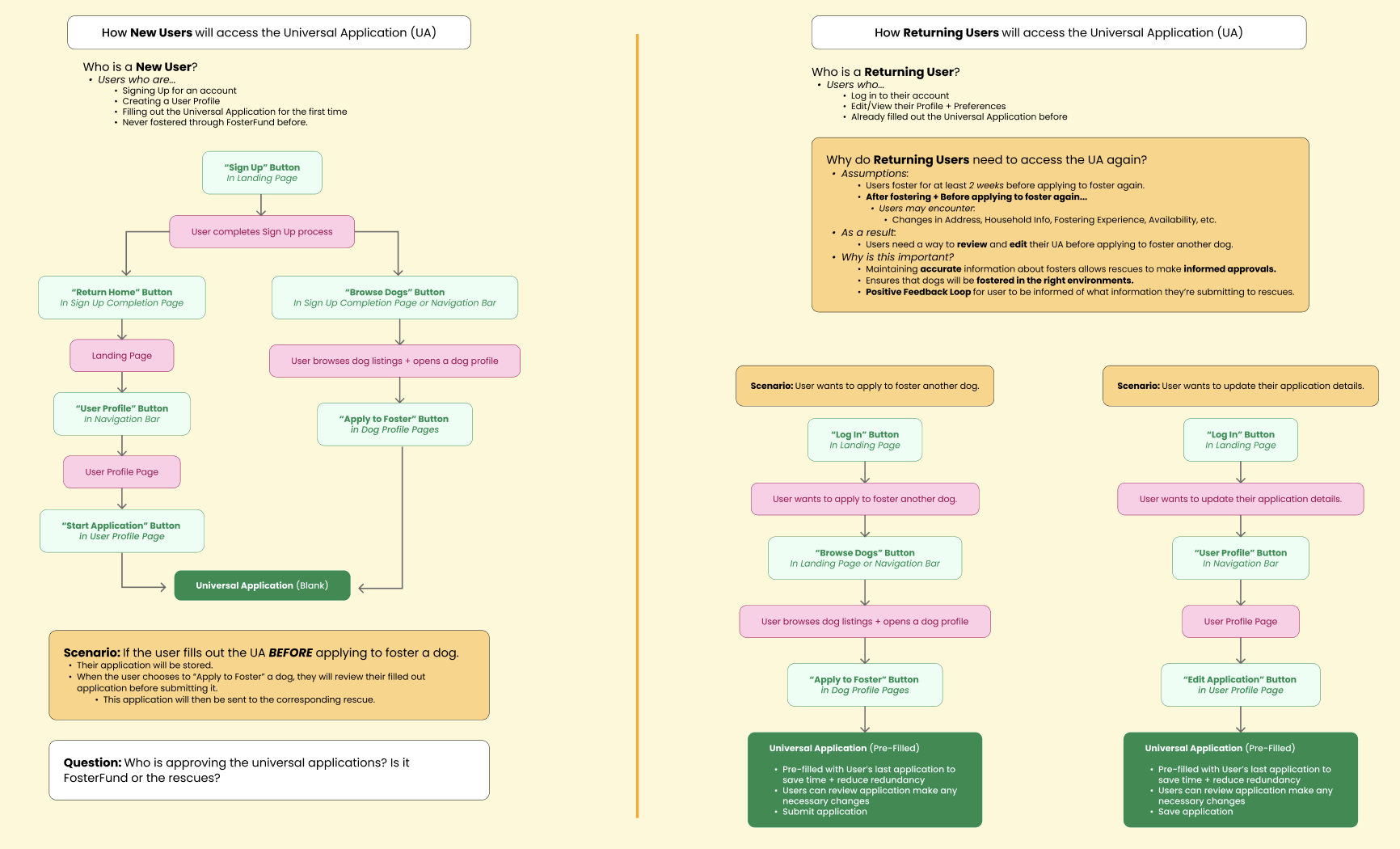
One of our earliest strategic decisions was determining when users should encounter the Universal Application. Initial discussions suggested requiring the application early in the journey. However, when mapping user flows, we recognized that many users wanted to browse available dogs before committing to a lengthy form.
This insight led us to redesign the experience around exploration first and commitment second. Users could discover available dogs, learn about the platform, and understand the value of fostering before being prompted to complete the application process.
PHASE 3: DESIGNING THE SOLUTION
Design Evolution
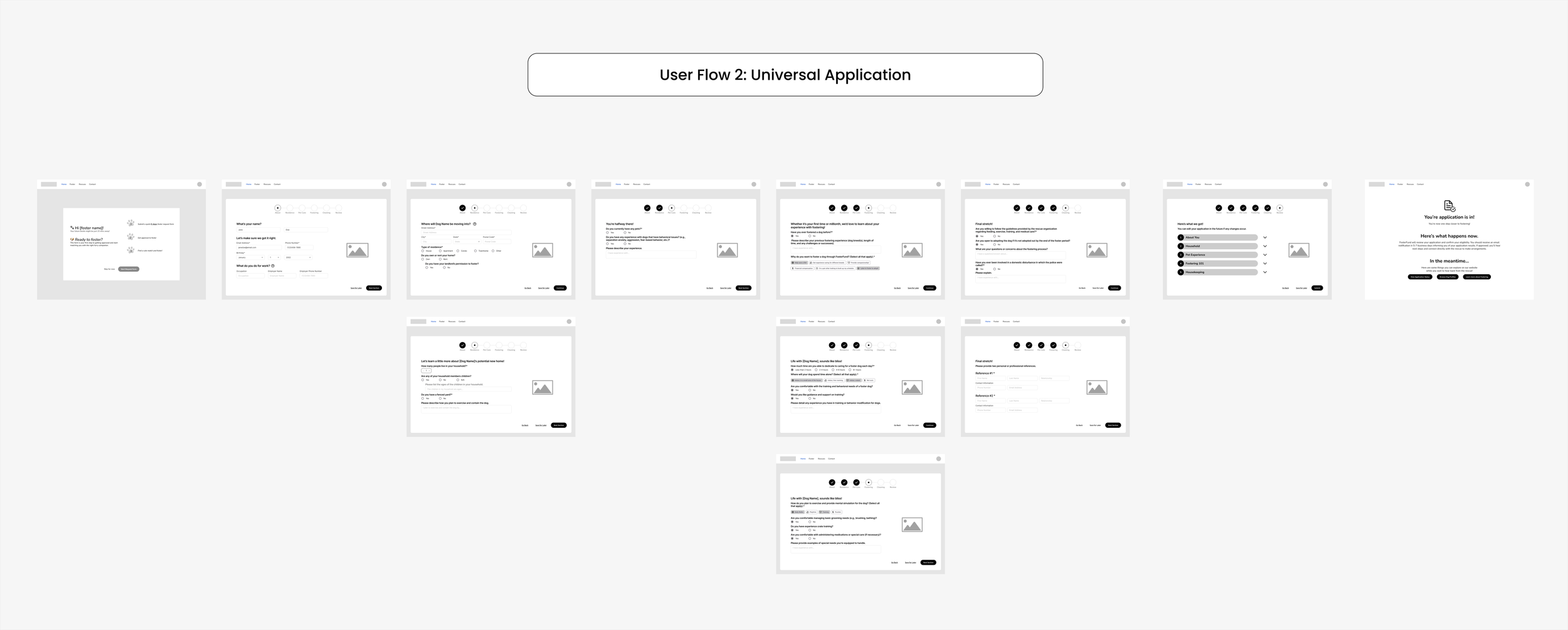
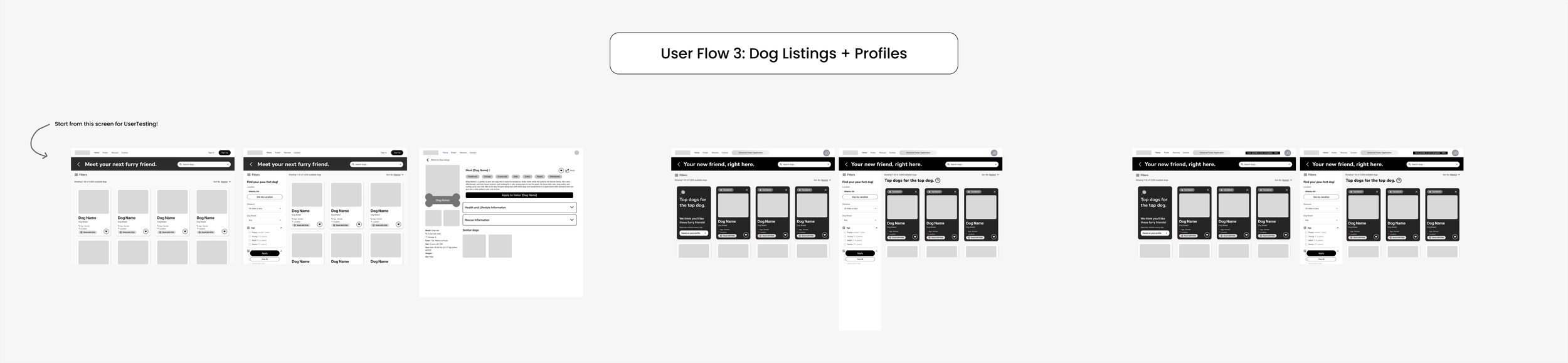
We translated our user flows into low and mid-fidelity prototypes, focusing on the core journeys of browsing dogs, creating an account, and completing the Universal Application. Rather than optimizing visual design early, we prioritized clarity, navigation, and task completion to validate whether users could successfully move through the experience.
Through internal reviews, stakeholder feedback sessions, and iterative testing, we continuously refined the product structure before investing in high-fidelity designs.

PHASE 4: VALIDATING WITH THE USERS
Usability Testing & Key Findings
To evaluate our assumptions, we conducted moderated usability tests with prospective foster users. Participants completed tasks related to browsing available dogs, creating an account, and submitting the Universal Application.
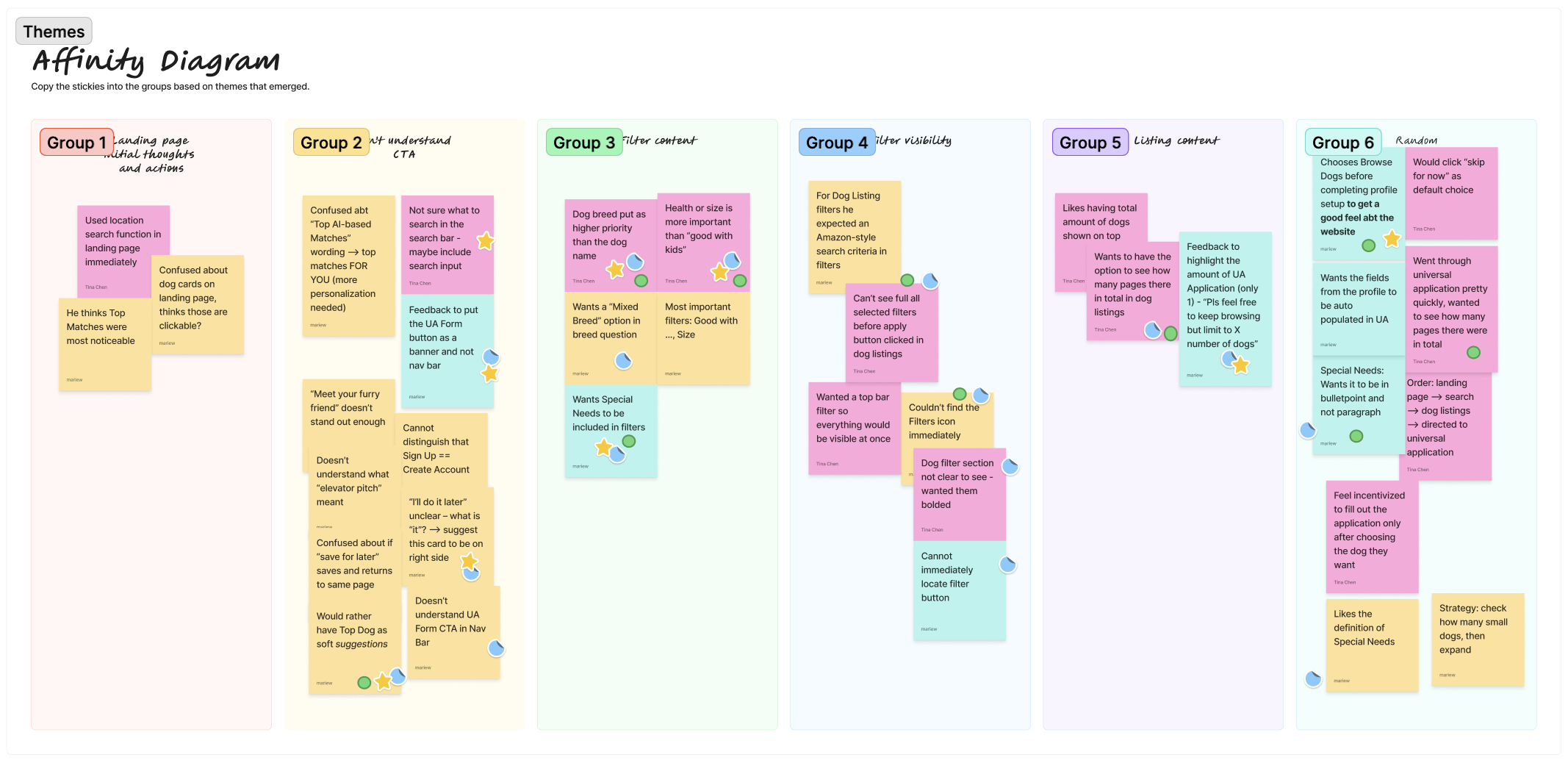
The most significant finding was that users struggled to understand the purpose of the Universal Application. Many overlooked it entirely or were unsure why they should complete it. In response, we repositioned the feature throughout the experience, introduced clearer calls-to-action such as “Become a Foster Today,” and added contextual messaging that explained its value.
Testing also revealed that filters were difficult to discover and several interface labels created confusion. We improved filter visibility, strengthened action-oriented copy, and replaced ambiguous language with terminology that aligned more closely with user expectations.
PHASE 5: DELIVERING THE MVP
Final Solution
The final MVP introduced a streamlined fostering experience centered around three core capabilities:
A universal application that reduces repetitive paperwork across rescue organizations.
Personalized dog discovery through search and filtering.
Rescue management tools that support dog profile creation and foster matching.
To support future scalability, we also developed FosterFund's first design system and visual identity. Built around principles of warmth, simplicity, and trust, the system established a foundation for future product growth and brand consistency.

Testimonial
“Elise and I are very impressed with the team’s work and the multiple UX options they have given us in the course of us working together!”
— Lori Lefcourt, Co-Founder of Fosterfund
Next Project
Made with ❤️ and lots of iced lattes